 By Admin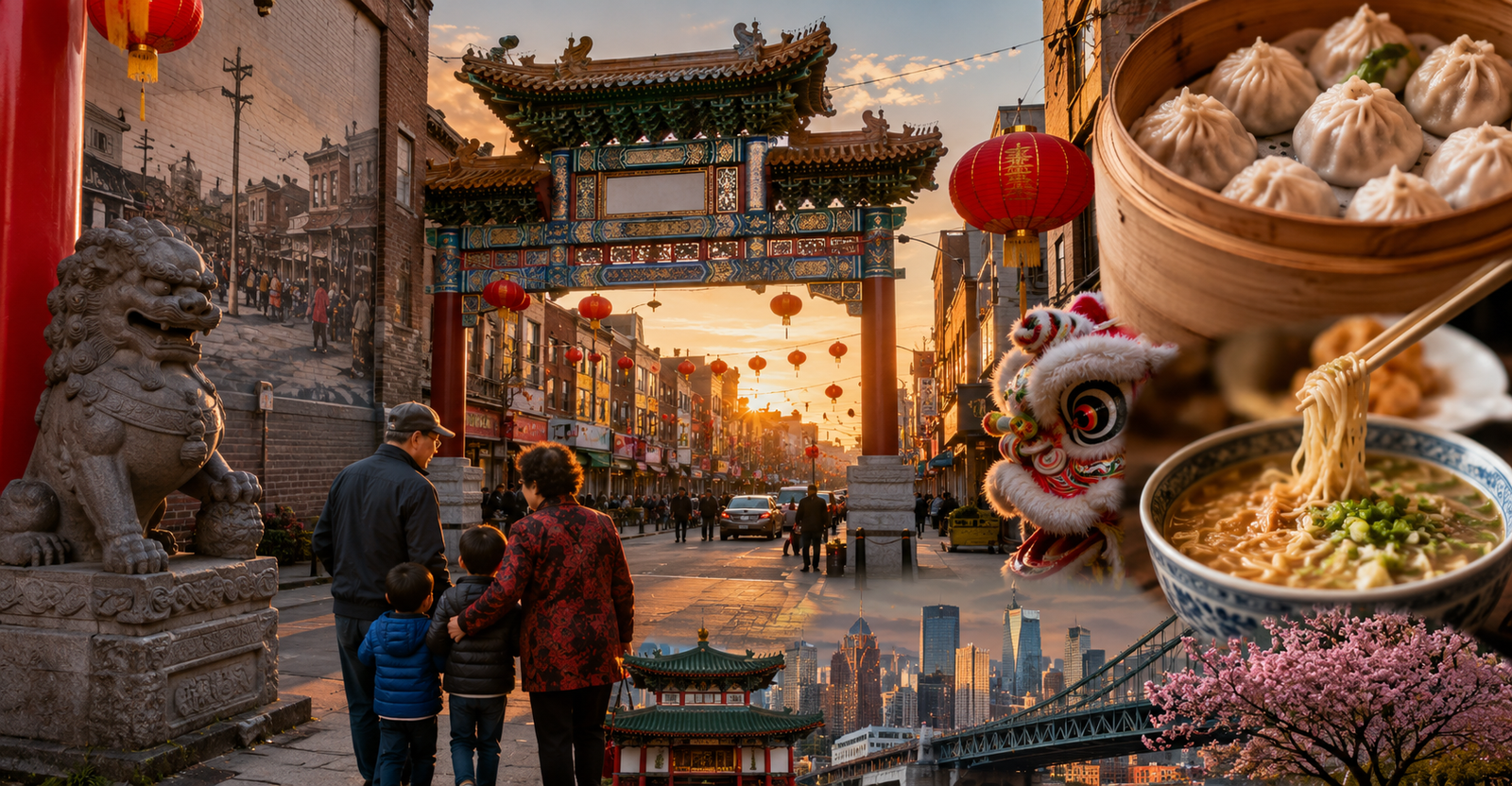
Philadelphia Chinatown is often introduced to visitors through food. People come for dumplings, noodles, roast duck, bakeries, bubble tea, hot pot, karaoke, late-night meals, and the glowing Chinatown Friendship Gate at 10th and Arch Streets. But to understand why Chinatown still matters Philadelphia, you have to look beyond restaurants and tourist photos.
This neighborhood is not just a place to eat. It is a living community, a business district, an immigrant gateway, a cultural anchor, and one of the city’s strongest examples of resilience. Chinatown has survived exclusion, highway construction, development pressure, stadium proposals, casino plans, and repeated fears of displacement. Yet it remains one of the most recognizable and meaningful neighborhoods in Center City Philadelphia.
What makes Chinatown Philadelphia important is not one single thing. It matters because of its food, its history, its people, its small businesses, its institutions, and its role as a place where generations of Asian American families have built community in the middle of a changing city.
Chinatown Is More Than a Restaurant District
For many visitors, the first connection to Philadelphia Chinatown is food. That makes sense. The neighborhood has some of the city’s most loved restaurants, bakeries, tea shops, markets, and late-night dining spots.
You can find Cantonese, Sichuan, Vietnamese, Korean, Japanese, Thai, Burmese, and other Asian food traditions in and around the neighborhood. Visit Philadelphia describes the area as a cultural hub with restaurants, shops, festivals, and food representing several East Asian and Southeast Asian cultures.
But food is only the surface. Behind many of those restaurants are family stories, migration stories, long workdays, language barriers, community ties, and businesses passed across generations. A bowl of noodle soup or a bakery box may look simple to a visitor, but in Chinatown, food is also memory, identity, and survival.
That is why reducing the neighborhood to “a place to grab dinner” misses the point. Chinatown matters because it turns food into a cultural language. It lets people taste home, share traditions, and introduce others to a community that has helped shape Philadelphia for more than a century.
The Early History of Philadelphia Chinatown
The story of Philadelphia Chinatown begins around Race Street. Many histories trace the neighborhood’s roots to Lee Fong, a Chinese immigrant who opened a laundry at 913 Race Street in the 1870s. Over time, Chinese-run laundries and restaurants formed a small but important business cluster in that part of the city.
This growth happened during a difficult period for Chinese immigrants in the United States. The Chinese Exclusion Act of 1882 restricted Chinese immigration and made family life harder for many early immigrants. Many Chinese men were separated from relatives, blocked from citizenship, and forced into limited kinds of work.
That history matters because it shows that Chinatown was not created as a tourist destination. It was built out of necessity. It gave Chinese immigrants a place to work, gather, speak their language, find support, and survive in a country that often rejected them.
After World War II, immigration rules changed, and the neighborhood became more family-oriented. Churches, schools, associations, homes, restaurants, and shops helped turn Chinatown Philadelphia into more than a business strip. It became a community.
The Friendship Gate Is More Than a Landmark
The Chinatown Friendship Gate is one of the most photographed landmarks in Philadelphia Chinatown. It stands at 10th and Arch Streets, welcoming people into the neighborhood with bright colors, dragon motifs, and traditional design details.
The gate is 40 feet tall and weighs 88 tons, and Visit Philadelphia notes that it was built in collaboration with artisans from Tianjin, China, using a style inspired by Qing Dynasty architecture.
For visitors, the gate is a photo stop. For the neighborhood, it is much more than that. It marks identity. It says that Chinatown is visible, rooted, and worthy of recognition. It is a symbol of friendship, but also a sign of presence in a part of the city where development pressure has often threatened to erase or shrink the community.
A gateway may not protect a neighborhood by itself. But it gives people a visual reminder that Chinatown belongs to Philadelphia, and Philadelphia would not be the same without it.
Food Keeps the Neighborhood Alive
Food is one of the strongest reasons Chinatown still matters in Philadelphia. The neighborhood’s restaurants and markets serve visitors, workers, students, families, tourists, and late-night crowds. They also serve people who come from across the region because Chinatown offers ingredients, flavors, and community ties they may not find elsewhere.
Restaurants like Sang Kee Peking Duck House, EMei, Vietnam Restaurant, Tai Lake, Ocean City, David’s Mai Lai Wah, Dim Sum Garden, Nan Zhou Hand Drawn Noodle House, and many others help create the neighborhood’s rhythm. Bakeries, tea shops, grocery stores, herbal shops, and small markets add another layer of daily life.
These businesses do more than feed people. They create jobs, support families, draw foot traffic, preserve culinary traditions, and give younger generations a connection to culture. A restaurant sign in Chinatown is often also a family history.
That is why supporting these businesses matters. When visitors eat in Chinatown, buy from local shops, and treat the neighborhood with respect, they help sustain more than a food scene. They help sustain a living cultural district.
Chinatown Is a Home, Not Just a Destination
One of the biggest mistakes people make is thinking of Chinatown Philadelphia only as a place to visit. It is also a residential neighborhood. People live there. Seniors gather there. Families worship there. Children attend school there. Immigrants find services there. Community groups organize there.
This is why development debates in Chinatown often become emotional. When outsiders see only restaurants and storefronts, they may not understand what is at stake. For residents, the issue is not only business disruption. It is home, safety, belonging, language access, affordability, and the ability to remain in a neighborhood built by generations of immigrants.
Chinatown works because its roles connect. It is a commercial district, a residential community, and a cultural home at the same time. If one part weakens, the whole neighborhood becomes more vulnerable.
A Long History of Resistance
Philadelphia Chinatown has had to fight for its future many times. The Vine Street Expressway left a deep mark on the neighborhood, cutting through the area and separating parts of the community. The neighborhood also faced pressure from large public and private projects over the decades, including stadium, prison, casino, and arena proposals.
Most recently, the proposed 76ers arena near Market East became one of the biggest development battles in the city. Community groups argued that the arena could bring traffic, rising rents, displacement, and cultural harm to Chinatown. In January 2025, the 76ers abandoned the Center City arena plan and chose to remain in South Philadelphia through a new arena plan with Comcast Spectacor.
That outcome was not just a sports story. It was a reminder that Chinatown’s future has often depended on organized community resistance. Residents, business owners, students, elders, activists, and allies have repeatedly pushed back when they believed the neighborhood’s survival was at risk.
The Role of Community Organizations
The strength of Chinatown Philadelphia comes partly from its organizations. Groups like the Philadelphia Chinatown Development Corporation, also known as PCDC, have played a central role in housing, planning, business support, and advocacy.
Other organizations and community spaces also matter, including Asian Americans United, Holy Redeemer Church and School, FACTS Charter School, Asian Arts Initiative, Chinese Christian Church and Center, Philadelphia Suns, and student groups that have helped raise awareness around preservation.
These groups help Chinatown function as more than a food corridor. They support education, culture, housing, language access, youth leadership, public meetings, and political organizing. Without them, the neighborhood would be easier to treat as empty land for outside projects.
Community infrastructure may not always be visible to visitors, but it is one of the reasons Chinatown has survived.
The Chinatown Stitch and the Need to Repair Past Harm
One of the most important planning ideas connected to Chinatown is the Chinatown Stitch. The project was created to reconnect parts of the neighborhood divided by the Vine Street Expressway. The city says the project aims to build a highway cap over I-676 between 10th and 13th Streets, making it easier and safer for people to reach work, school, doctors, stores, and parks.
The idea is powerful because it recognizes that infrastructure can harm communities. Highways are not just roads. They can divide neighborhoods, reduce walkability, create unsafe crossings, and weaken community life.
The Chinatown Stitch is about more than green space. It is about repair. It asks how a city can reconnect what past planning decisions broke. Even when funding and timelines change, the project remains important because it names the damage and imagines a better future for the neighborhood.
Chinatown’s Culture Is Still Growing
A living neighborhood does not stay frozen in the past. Philadelphia Chinatown has changed over time. It began with early Chinese immigrants, but today it includes a wider mix of Asian and Asian American cultures, businesses, languages, and traditions.
That growth is part of what keeps the neighborhood relevant. You can find older family restaurants beside newer dessert shops, traditional herbal stores near karaoke lounges, bakeries next to modern cafes, and community institutions near nightlife spots.
Events such as Lunar New Year parades, YèShì Chinatown Night Market, and the nearby Philadelphia Chinese Lantern Festival help bring culture into public space. They also invite visitors to see Chinatown as active and present, not only historic.
The neighborhood matters because it keeps adapting while still holding onto memory.
Why Visitors Should Care
Visitors have a role in how Chinatown is understood and supported. It is fine to come for food, photos, festivals, and shopping. Those experiences are part of the neighborhood’s public life. But visitors should also recognize that Chinatown is not a theme park or a backdrop.
A respectful visit means supporting small businesses, learning a little history, being mindful of residents, and understanding that the neighborhood’s survival has not been guaranteed. It means seeing the people behind the storefronts.
If you visit Chinatown Philadelphia, walk beyond the obvious corner. Notice the grocery stores, churches, family associations, murals, seniors, students, and everyday routines. Eat well, but also pay attention.
Chinatown and the Future of Center City
The future of Center City Philadelphia should include Chinatown, not push it aside. A city that values culture cannot treat historic immigrant neighborhoods as obstacles to development.
Chinatown brings life to the city in ways that are hard to replace. It offers food, language, memory, small business ownership, cultural education, public art, festivals, walkability, and a deep sense of place. It connects Philadelphia to Asian American history and to families across the region who still see the neighborhood as a home base.
If Chinatown weakens, Philadelphia loses more than restaurants. It loses a piece of its identity.
Why Chinatown Still Matters
Chinatown still matters in Philadelphia because it is one of the city’s clearest examples of how culture survives through community. It matters because immigrants built it when they needed safety and opportunity. It matters because families kept businesses open through hardship. It matters because residents defended it from projects that could have erased its character.
It also matters because it remains useful, loved, and alive. People still eat there, shop there, worship there, organize there, celebrate there, and return there when they need a sense of belonging.
For visitors, Philadelphia Chinatown may begin with a meal. But if you look closer, it becomes something much deeper: a story of food, history, resistance, and community in the heart of Philadelphia.
 Leo
Leo