 By Admin
If you have searched “why does my throat hurts after vomiting”, you are probably dealing with that raw, burning, scratchy feeling that can show up after being sick. It can feel like your throat hurts from throwing up, or like there is a sour, irritated burn that will not settle right away.
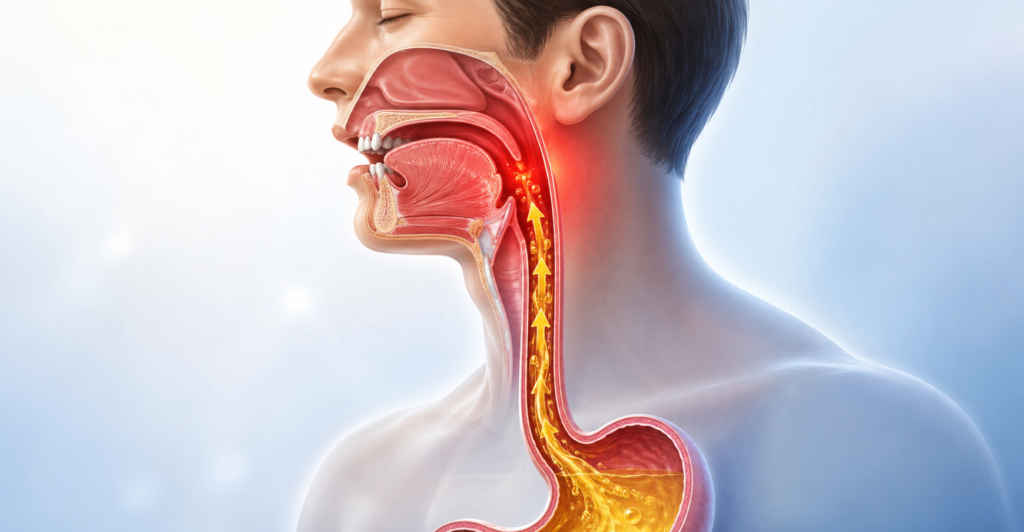
The most common reason is simple: vomiting forces stomach contents, including stomach acid, back up through the esophagus and throat. Cleveland Clinic explains that both the forceful motion of vomiting and stomach acid moving through the throat can contribute to esophagitis, which means inflammation of the esophagus.
Does Vomiting Cause Sore Throat?
Yes, does vomiting cause sore throat is a very common question, and the answer is yes. Vomiting can cause a sore throat because the throat and esophagus are not built to handle strong stomach acid the way the stomach lining is. When that acid moves upward, it can irritate the tissues and leave the throat feeling sore, burned, tight, or scratchy.
That is why a sore throat after vomiting often feels different from a sore throat caused by a cold. A cold-related sore throat may feel swollen, dry, or scratchy, while sore throat due to vomiting often comes with a burning feeling, sour taste, hoarseness, or pain when swallowing.
Why Does My Throat Hurt After Puking?
If you are asking “why does my throat hurt after puking”, the main reason is irritation from acid and pressure. Vomiting is not gentle on the body. Your stomach, diaphragm, chest muscles, throat, and esophagus all contract hard to push stomach contents upward.
During that process, three things can happen:
Stomach acid irritates the throat.
Acid is useful inside the stomach, but when it reaches the esophagus or throat, it can burn and inflame sensitive tissue. GERD research also shows that acid, pepsin, and bile salts can damage the esophageal lining when they contact it repeatedly.
The force of vomiting strains the esophagus.
Cleveland Clinic notes that the esophagus is a muscular tube, and the forceful stretching and contracting during vomiting can aggravate it and cause pain.
Small tears or dryness can make the pain sharper.
Repeated or forceful vomiting may cause tiny tears in the esophagus, and dehydration or dry throat after vomiting can make the soreness feel worse.
What Post Vomiting Throat Pain Feels Like
Post vomiting throat pain can feel different from person to person. Some people feel a mild scratch. Others feel a burning pain that makes swallowing uncomfortable.
Common symptoms include:
- Throat pain after throwing up
- Burning in the throat or upper chest
- Scratchy or raw feeling
- Sour or bitter taste in the mouth
- Hoarse voice
- Dry throat
- Pain when swallowing
- Feeling like something is stuck in the throat
Cedars-Sinai lists sore throat, trouble swallowing, pain when swallowing, heartburn, nausea, vomiting, and a feeling of something stuck in the throat as possible symptoms of esophagitis.
Why the Throat Is Sore From Throwing Up
When your throat is sore from throwing up, it usually means the lining has been irritated. The throat, voice box area, and esophagus are delicate. They can become inflamed after contact with acidic stomach contents.
This is also why some people notice hoarseness after vomiting. Acid can travel high enough to irritate the larynx and pharynx, which are involved in voice and swallowing. Medical sources describe laryngopharyngeal reflux as stomach contents, including acid and pepsin, reaching beyond the esophagus into the throat and voice area, causing irritation.
So, if after puking throat hurts, it does not always mean you have an infection. It may simply be irritation from acid, pressure, and dryness.
How Long Does Throat Soreness After Vomiting Last?
Mild throat soreness after vomiting often improves within a few days once the vomiting stops and your throat has time to recover. Cleveland Clinic notes that mild esophagitis may last only a few days, but it can take up to a few weeks for the throat to feel fully normal if the irritation is stronger.
The healing time depends on:
- How many times you vomited
- How forceful the vomiting was
- Whether you have acid reflux or GERD
- Whether you are dehydrated
- Whether you keep irritating the throat with spicy, acidic, or very hot foods
- Whether there is an underlying infection or digestive issue
If the throat ache after vomiting is mild and slowly improving, that is usually reassuring. If it is getting worse, lasting several days, or happening often, it should be checked.
How to Soothe a Sore Throat After Vomiting
The goal is to calm irritation, protect the throat, and avoid making the acid burn worse.
Rinse your mouth gently
After vomiting, rinse your mouth with water. This helps clear acid from the mouth and throat area. Do not brush your teeth immediately after vomiting, because acid can temporarily soften tooth enamel. Waiting a bit and rinsing first is usually gentler.
Gargle with salt water
A warm saltwater gargle can help reduce throat irritation. Cleveland Clinic recommends gargling with saltwater for throat pain after vomiting and advises not to drink the saltwater because it can upset the stomach or worsen dehydration.
Sip warm, soothing drinks
Warm tea can feel calming on an irritated throat. The drink should be warm, not hot, because very hot liquids can make the irritation worse. Cleveland Clinic notes that warm teas may provide a soothing sensation after vomiting-related throat pain.
Try honey if it is safe for you
Honey can coat the throat and make soreness feel easier to manage. Cleveland Clinic mentions honey as a home remedy that may help soothe pain linked with esophagitis. Honey should not be given to children under 1 year old.
Avoid spicy, acidic, and very hot foods
If your throat sore from vomiting feeling is still fresh, skip orange juice, lemon drinks, hot coffee, spicy meals, vinegar-heavy foods, and very hot soup. Cleveland Clinic advises avoiding foods and drinks that are hot in temperature, spicy, or acidic while the esophagus is healing.
Use OTC pain relief carefully
Over-the-counter pain relievers or throat sprays may help some people, but they are not right for everyone. Healthline notes that acetaminophen, NSAIDs, phenol sprays, and antacids may be used in some cases, but people with stomach ulcers or reflux-related conditions should ask a doctor about pain reliever risks.

What to Eat When Your Throat Hurts From Throwing Up
When the throat feels raw, soft and gentle foods are usually easier. Good options may include:
- Plain toast or crackers
- Bananas
- Applesauce
- Oatmeal
- Rice
- Broth that is warm, not hot
- Yogurt, if it does not upset your stomach
- Mashed potatoes
- Soft scrambled eggs
Try to avoid greasy meals, alcohol, citrus, carbonated drinks, spicy food, and heavy meals until your stomach and throat settle. If vomiting was caused by a stomach bug, food poisoning, migraine, pregnancy nausea, alcohol, or acid reflux, the best food choice may depend on the cause.
When a Sore Throat After Vomiting Could Be More Serious
Most cases of sore throat after vomiting are temporary. But there are times when you should not ignore the symptoms.
Make an appointment with a healthcare provider if:
- Your symptoms last for several days
- You have trouble swallowing
- You have trouble breathing
- You cannot keep fluids down
- You vomit repeatedly
- You have severe chest or throat pain
- You notice blood in your vomit
- You have signs of dehydration
Cleveland Clinic advises getting medical care if symptoms last several days, if you have trouble swallowing or breathing, if you cannot keep fluids down, or if there is blood in vomit. Healthline also lists shortness of breath, chest pain, and vomiting blood as emergency warning signs with throat pain after vomiting.
Could Repeated Vomiting Damage the Throat?
Yes, repeated vomiting can do more than cause a temporary sore throat. Chronic vomiting is listed by Cedars-Sinai as one possible cause of esophagitis.
If vomiting happens often, the repeated acid exposure can irritate the esophagus again and again. Over time, this may lead to more serious problems, especially if there is also acid reflux, GERD, an eating disorder, pregnancy-related severe vomiting, medication side effects, alcohol-related vomiting, or another digestive condition.
That does not mean one episode of vomiting will cause long-term damage. But frequent vomiting plus ongoing throat pain is a reason to speak with a healthcare professional.
Is It Acid Reflux or Just Vomiting Irritation?
Sometimes people think their throat pain is only from vomiting, but reflux may also be involved. Acid reflux happens when stomach acid flows back into the esophagus. GERD is a more frequent or chronic form of reflux. Cedars-Sinai describes GERD as a digestive disorder caused by gastric acid flowing back into the esophagus.
Reflux may be more likely if you also have:
- Heartburn
- Sour or bitter taste
- Burning in the chest or throat
- Symptoms that worsen when lying down
- Frequent burping
- Chronic cough
- Hoarseness
- Feeling of a lump in the throat
If the same symptoms keep coming back even when you have not vomited, reflux may be part of the problem.
Why Your Voice May Sound Hoarse After Vomiting
Vomiting can irritate more than just the throat. If acid reaches the voice box area, your voice may sound rough, weak, or hoarse for a while. Laryngopharyngeal reflux can involve acid and pepsin reaching the larynx and pharynx, and symptoms may include hoarseness, throat clearing, chronic cough, and a globus sensation.
Resting your voice, sipping warm fluids, and avoiding smoke or strong odors may help. If hoarseness lasts longer than expected or keeps returning, it is worth getting checked.
Why does my throat hurt after vomiting?
Your throat usually hurts because stomach acid, pressure, and forceful muscle contractions irritate the esophagus and throat lining.
Does vomiting cause sore throat?
Yes. Vomiting can cause a sore throat by exposing the throat and esophagus to stomach acid and physical strain.
Why does my throat hurt after puking?
The pain often comes from acid irritation, dryness, and sometimes small tears caused by forceful vomiting.
What helps throat pain after throwing up?
Saltwater gargles, warm tea, honey, rest, and avoiding acidic or spicy foods may help mild irritation.
When should I worry about post vomiting throat pain?
Get medical help if the pain is severe, lasts several days, comes with trouble breathing or swallowing, or if you vomit blood.
Key Takeaway
If your throat is sore from throwing up, it is usually because vomiting brought stomach acid up into sensitive throat and esophageal tissue. This can cause throat pain after throwing up, burning, dryness, hoarseness, and a raw feeling when swallowing.A mild sore throat due to vomiting often improves with time, fluids, gentle foods, saltwater gargles, honey, and avoiding acidic or spicy triggers. But severe pain, blood in vomit, trouble breathing, trouble swallowing, repeated vomiting, or pain that does not improve should be checked by a medical professional.
 Jack kallis