 By Admin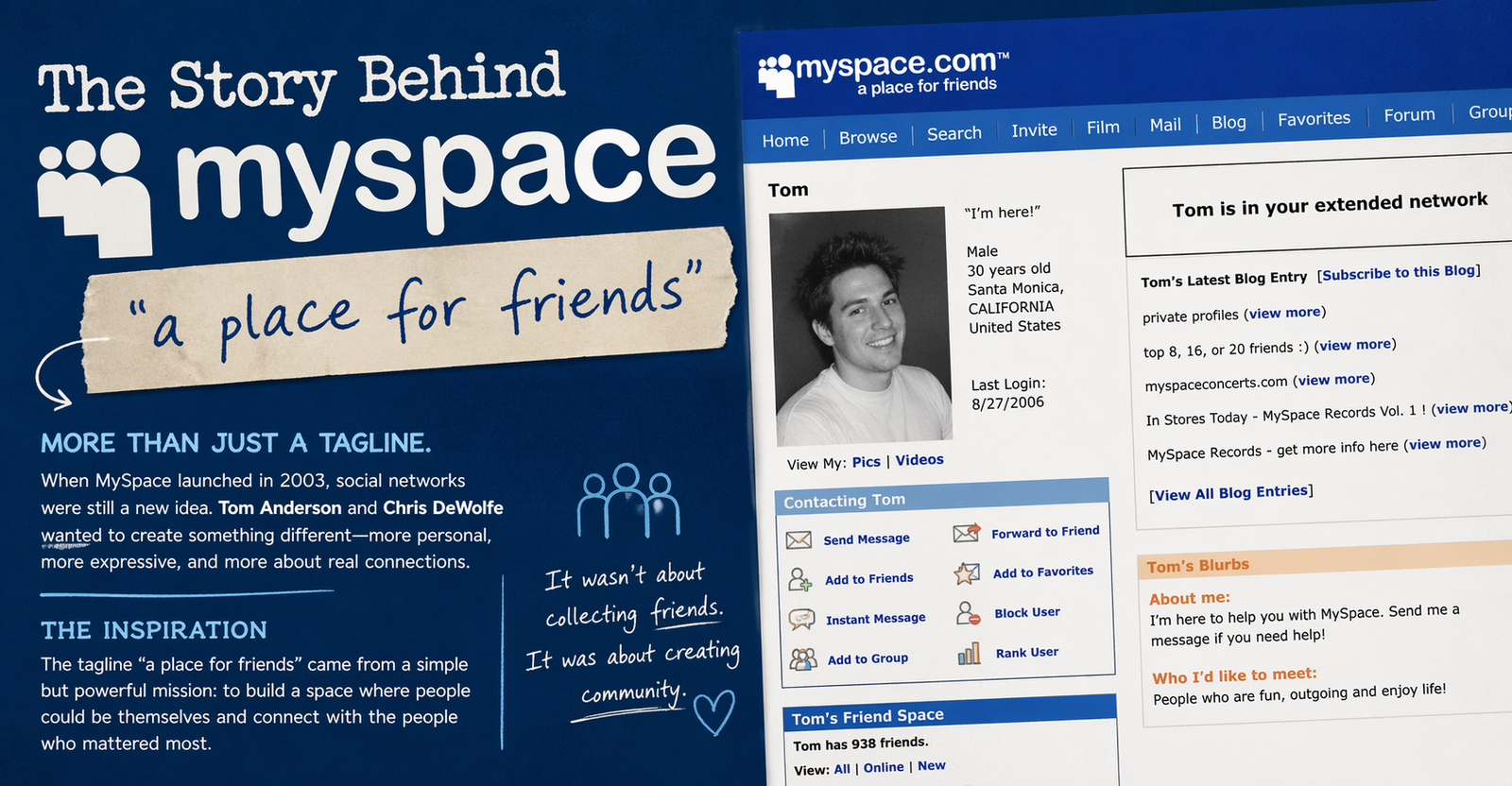
Long before social media became a polished, algorithm-driven part of everyday life, MySpace introduced itself with a simple promise: “A Place for Friends.” That short line did a lot of work. It told people what the site was for, who it was meant to connect, and why it felt different at a time when online social networks were still finding their identity. In the old MySpace logo, the phrase appeared right under the brand name. Then, in July 2009, TechCrunch reported that MySpace had removed the tagline and started using a stripped-down logo that simply said MySpace.
That change turned the slogan into a piece of internet history. Once the words disappeared, people remembered them even more. For many users, “A Place for Friends” captured what early MySpace felt like: personal, messy, expressive, social, and surprisingly warm. It was not trying to sound corporate or futuristic. It sounded human, which is probably one reason it stuck.
Why the tagline fit MySpace so well
MySpace launched in 2003 and quickly became the biggest social network of its era. Britannica notes that it was the most popular social network from 2005 to 2008, while also becoming especially notable for giving music artists a large platform to promote their work. The site let users create profiles, share photos, list interests, connect to other profiles, and build an online identity that felt far more customizable than what later platforms would allow.
That is what made “A Place for Friends” such a smart line. It was simple, but it matched the product. MySpace was built around visible friend connections, profile pages, self-expression, and discovery through people you already knew. Britannica describes it as a free, ad-supported service where people could create profiles and link to other users, using it to keep in touch with friends, meet new people, and even connect with romantic interests.
The phrase also had a kind of friendliness that early users responded to. It did not sound technical. It did not sound like a utility. It sounded like an invitation. In the mid-2000s, that mattered. Social networking was still a newer behavior for a lot of people, and a line like “A Place for Friends” made the concept feel easy to understand.
It reflected the way people actually used MySpace
The slogan worked because it lined up with how people experienced the platform. A Medium reflection on early social media describes MySpace as the hottest platform from about 2005 to 2008, where users could post like a blog, share likes and dislikes, and add music to their pages. That description helps explain why the tagline felt believable. MySpace was not just about finding contacts. It was about building a page that friends would actually visit.
That difference is easy to forget now. Early MySpace profiles were full of personality. Users could change layouts, show off favorite songs, post photos, write updates, and treat their page almost like a digital bedroom wall. Britannica also notes that the site developed a reputation for giving users greater freedom in profile design than more traditional social media platforms. Put all of that together, and the tagline starts to make even more sense. MySpace was not just a network where people existed next to each other. It was a place where friendships had a visible, performative, creative space.
The phrase also matched MySpace’s moment in internet culture
There is another reason people still remember the line. It belonged to a very specific internet era. The Guardian reported in August 2006 that MySpace had signed its 100 millionth member just over three years after launch by Chris DeWolfe and Tom Anderson. Comscore said in June 2006 that MySpace.com had surpassed 50 million U.S. visitors in May, a sign of just how dominant the platform had become.
At that point, MySpace was not a niche site. It was a major part of online culture. The platform had scale, visibility, and influence, but it still carried branding that felt personal rather than corporate. That contrast is part of what gives “A Place for Friends” its nostalgic power now. It came from a moment when social media still felt more intimate, even when it was already becoming massive.
Why MySpace dropped “A Place for Friends”
By 2009, the mood around MySpace had changed. TechCrunch reported that the company changed its logo so it no longer read “MySpace.com – A Place For Friends” and instead simply used MySpace. The same report said the company was pushing hard for more users, encouraging people at login to invite friends from email and adding a “people you may know” widget to logged-in profile pages. Fast Company added more context, saying the change came after layoffs, cuts to overseas operations, declining viewership, and an effort to boost advertising revenue and recast the brand as the social network of choice.
In other words, the removal of the tagline was not just a small design tweak. It looked like part of a broader attempt to reposition MySpace at a time when it was under pressure. The old slogan sounded warm and community-driven, but the company appeared to be moving into a more defensive phase, one focused on growth tactics, cleaner branding, and a fight to stay relevant.
What made the slogan memorable in the first place
A lot of tech slogans are quickly forgotten because they sound interchangeable. “A Place for Friends” was memorable because it was plain, specific, and emotionally easy to understand. It told users exactly what kind of online experience they were walking into. It also matched the product at the time: a profile-based network built around visible friendships, personalization, and self-expression.
It also helped that MySpace had a distinct personality. Britannica points out that the site stood out by encouraging musical artists to promote themselves there, which made it especially popular with teenagers and young adults. That mix of friendship, music, identity, and discoverability gave the platform a cultural texture that later networks often flattened into cleaner, more uniform experiences. The slogan did not need to explain every feature. It just needed to capture the feeling.
Why people still search for it now
Today, many searches for “a place for friends slogan” are really searches for MySpace itself. Some are driven by nostalgia. Some come from people trying to remember the exact wording. Some come from crossword clues and trivia pages. But underneath all of those searches is the same reason the line lasts: it still feels tied to a very recognizable version of the internet. MySpace may no longer dominate social networking, but the slogan remains one of the clearest reminders of what the platform once meant to millions of users.That is the real story behind MySpace’s“A Place for Friends” tagline. It was not just a catchy phrase under a logo. It was a compact summary of what made MySpace feel inviting, culturally alive, and personal during its biggest years. Even after the words disappeared from the brand in 2009, they stayed attached to the memory of the platform itself. That is usually the sign of a slogan that truly worked.