 By Michael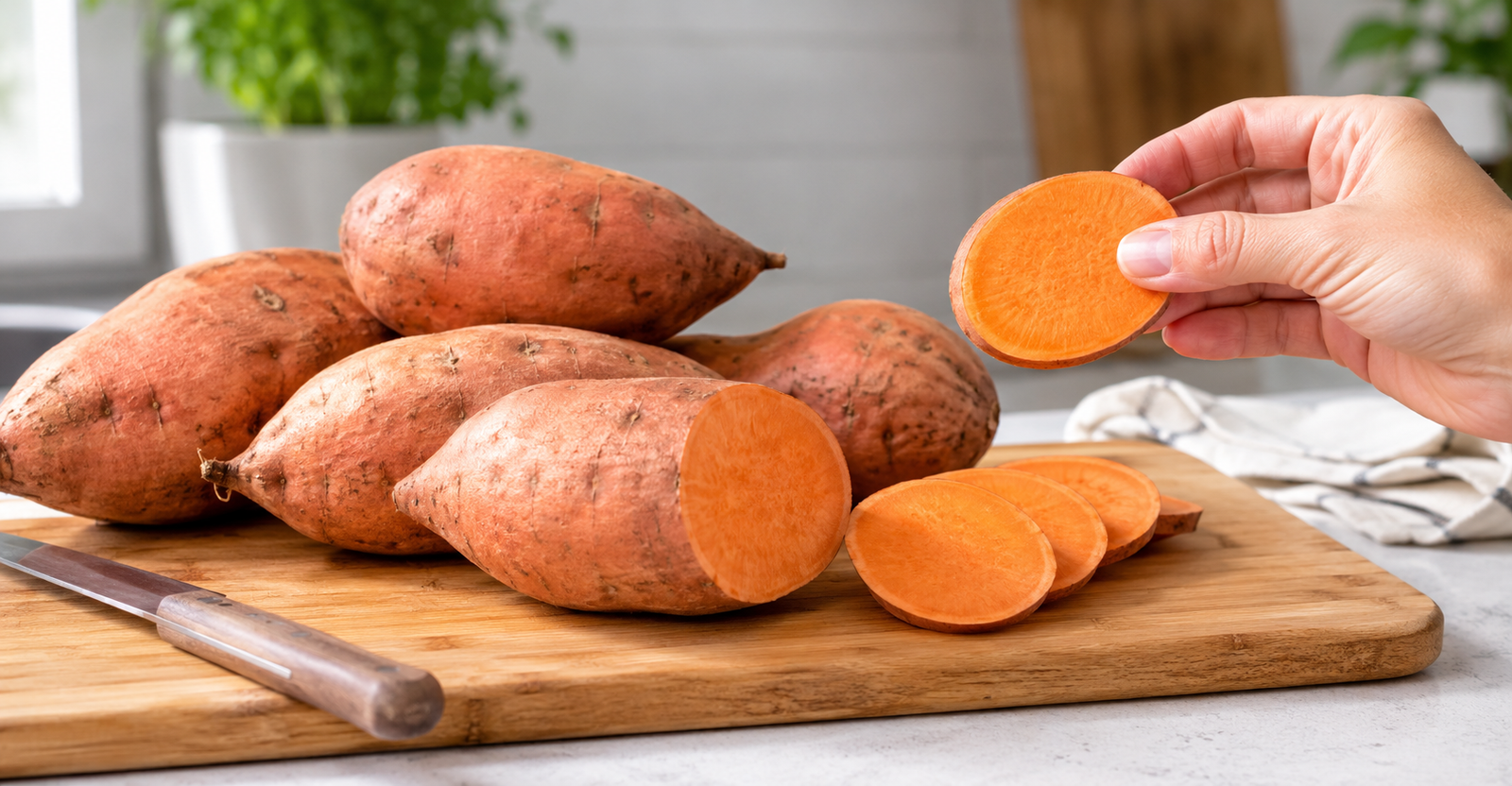
A lot of people wonder, can you eat raw sweet potato, especially when they slice one and notice it looks crunchy, fresh, and almost carrot-like. The simple answer is yes, sweet potatoes can be eaten raw, but they are usually better when eaten in small amounts and prepared properly.
So if you are asking, is raw sweet potato safe to eat, the answer is generally yes for most healthy adults, as long as the sweet potato is fresh, washed well, not moldy, and eaten in moderation. Raw sweet potatoes are different from regular white potatoes, and they are commonly discussed as safe to eat raw, although they may be harder to digest and less pleasant in texture. Southern Living notes that raw sweet potatoes are generally safe, while cooking can make them easier to digest and improve beta-carotene availability.
Quick Answer: Can You Eat Raw Sweet Potatoes?
Yes, you can eat raw sweet potatoes, but small portions are best. Raw sweet potato has a firm, crunchy texture and a mild earthy-sweet taste. It is not as soft or sweet as cooked sweet potato because cooking changes the starches and brings out more natural sweetness.
People search this in different ways, such as sweet potato can eat raw, can eat raw sweet potato, can eat sweet potato raw, and can u eat sweet potatoes raw. All of these mean the same thing: raw sweet potato is not automatically unsafe, but it should be cleaned carefully and eaten wisely.
The main things to know are:
Raw sweet potato is usually safe in small amounts
It may cause bloating, gas, or stomach discomfort in some people
Cooking makes it softer, sweeter, and easier to digest
Raw sweet potato must be washed and scrubbed before cutting or eating
Do not eat sweet potatoes that are moldy, rotten, badly bruised, or slimy
Is It Safe to Eat Raw Sweet Potatoes?
For most people, yes, it is safe to eat raw sweet potatoes when they are fresh and properly washed. The bigger safety concern is not the sweet potato itself but dirt, bacteria, or contamination on the skin, especially because sweet potatoes grow in soil.
The FDA recommends washing all produce under running water before preparing or eating it, even if you do not plan to eat the skin. The FDA also advises cutting away damaged or bruised areas and throwing away produce that looks rotten.
That matters because a knife can drag dirt or bacteria from the outside into the flesh when you cut it. So before eating raw sweet potatoes, wash your hands, scrub the sweet potato under running water, dry it, and use a clean cutting board.
What Does Raw Sweet Potato Taste Like?
Raw sweet potato tastes firm, crisp, slightly sweet, and a little starchy. It does not have the soft, caramel-like flavor you get from baking or roasting. Think of the texture as closer to a carrot, jicama, or raw turnip, but denser.
Some people enjoy it grated into salads or cut into thin matchsticks. Others find it too hard, dry, or chalky. That does not mean it is unsafe; it just means raw sweet potato is not everyone’s favorite texture.
A research paper on raw eating quality in sweet potato explains that raw eating quality is complex and depends on variety, texture, sweetness, and other quality traits.
Raw Sweet Potato vs Cooked Sweet Potato
Raw and cooked sweet potatoes are the same food, but they feel very different in the body. Cooking softens the fibers, changes the starch, and makes the flavor sweeter.
| Type | Texture | Taste | Digestion |
| Raw sweet potato | Crunchy, dense, firm | Mild, earthy, lightly sweet | May be harder to digest |
| Boiled sweet potato | Soft, moist | Mild and sweet | Usually easier on the stomach |
| Baked sweet potato | Creamy, tender | Sweeter and richer | Easier to chew and digest |
| Roasted sweet potato | Soft inside, browned edges | Deep, caramel-like sweetness | Usually very palatable |
USDA Agricultural Research Service explains that cooking sweet potatoes speeds up starch-degrading enzymes, converting some starch into maltose, which helps explain why cooked sweet potatoes taste sweeter. USDA also notes that beta-carotene may become more bioavailable after cooking.
Why Raw Sweet Potato May Upset Your Stomach
Even though raw sweet potato is safe to eat for many people, it can be harder on digestion. Raw sweet potatoes contain starch and fiber that may feel heavy in the stomach, especially if you eat a large amount quickly.
Possible symptoms after eating too much raw sweet potato include:
Bloating
Gas
Stomach cramps
Fullness
Loose stool in sensitive people
Nausea if eaten in a large amount
This does not mean raw sweet potato is poisonous. It simply means your digestive system may prefer it cooked. Sweet potato proteins can also include enzyme inhibitors such as trypsin inhibitors, and research has looked at trypsin inhibitor levels in sweet potato roots as an antinutritional factor that heat can reduce.
Can Sweet Potatoes Be Eaten Raw With the Skin?
Technically, the skin is edible, but raw sweet potato skin can be tough, earthy, and harder to clean. If you want to eat it raw, peeling is often better for texture. If you keep the skin, scrub it very well under running water.
The CDC advises washing or scrubbing fruits and vegetables under running water before eating, cutting, or cooking, and using a separate cutting board for produce away from raw meat, poultry, and seafood.
For raw eating, peeling is a smart choice if:
The skin looks rough or dirty
You are serving it to children
You have a sensitive stomach
You want a cleaner, smoother texture
The sweet potato has minor surface marks after washing
Do not use soap, detergent, or bleach on sweet potatoes. The FDA specifically says washing produce with soap, detergent, or commercial produce wash is not recommended because produce is porous and soap or detergent can be absorbed.
How to Prepare Raw Sweet Potato Safely
If you want to try raw sweet potato, preparation makes a big difference. Do not bite into a large raw sweet potato like an apple. It is too dense, and large chunks are not pleasant to chew.
A better method:
- Wash your hands first.
- Scrub the sweet potato under running water.
- Cut away bruised or damaged areas.
- Peel it if you want a smoother texture.
- Slice it thinly, grate it, shred it, or cut it into matchsticks.
- Eat a small amount first to see how your stomach handles it.
Raw sweet potato works better when it is thin, fresh, and mixed with other foods rather than eaten in thick chunks.
Best Ways to Eat Raw Sweet Potato
If you are curious about eating raw sweet potatoes, try them in simple ways:
Grated into salad with cabbage, carrot, apple, and lemon dressing
Thin matchsticks in a crunchy slaw
Small raw cubes in a fresh bowl
Spiralized sweet potato as a raw veggie noodle
Thin slices with hummus or yogurt dip
Blended in a smoothie in a small amount
A little acidity helps. Lemon juice, lime juice, apple cider vinegar, or yogurt dressing can balance the earthy flavor.
Who Should Be More Careful?
Raw sweet potato is not ideal for everyone. Some people should be more careful because raw produce carries more food-safety risk than fully cooked food, and raw starch can be harder to digest.
Be more cautious if you are:
Pregnant
Older adult
Immunocompromised
Recovering from stomach illness
Prone to IBS symptoms
Feeding young children
Dealing with diarrhea, vomiting, or digestive sensitivity
The FDA notes that children, older adults, pregnant people, and people with weakened immune systems can be especially vulnerable to foodborne illness.
For these groups, cooked sweet potato is usually the safer and gentler option.
When You Should Not Eat a Raw Sweet Potato
Do not eat raw sweet potato if it looks spoiled. Cooking does not fix every spoilage problem, and eating a rotten root is not worth the risk.
Avoid it if you notice:
Mold
Slimy texture
Bad smell
Black rotten spots
Soft wet areas
Severe bruising
Wrinkled, leaking, or mushy flesh
UC Davis says good-quality sweet potatoes should be smooth and firm, free from mechanical damage, and free from decay, insects, and diseases. It also notes that mechanical damage increases decay risk during storage.
Is Raw Sweet Potato Better Than Cooked?
Not really. Raw sweet potato has a fresh crunch, but cooked sweet potato is usually better for taste, digestion, and nutrient availability.
Orange-fleshed sweet potatoes are known for beta-carotene, a plant pigment your body can convert into vitamin A. USDA ARS describes orange-fleshed sweet potatoes as packed with beta-carotene and says vitamin A is important for childhood development, immune function, and vision.
Cooking can make beta-carotene easier for the body to access. That does not mean raw sweet potato has no nutrition; it simply means cooking may help your body use some nutrients better.
Raw Sweet Potato and Weight Loss
Raw sweet potato can be filling because it contains fiber and complex carbohydrates. But eating it raw does not magically make it better for weight loss. Portion size, total diet, and how it is prepared matter more.
A raw sweet potato slaw with lemon and herbs is very different from a deep-fried sweet potato dish. Both come from the same vegetable, but the meal around it changes the nutrition.
If your goal is a lighter meal, try:
Raw sweet potato slaw
Boiled sweet potato with beans
Baked sweet potato with yogurt
Roasted sweet potato with vegetables
Mashed sweet potato without too much sugar or butter
Raw Sweet Potato for Dogs Is Different
For humans, raw sweet potato may be okay in small amounts. For dogs, raw sweet potato is not usually recommended because it can be harder to chew and digest, and it may be a choking risk. If you are feeding a pet, cooked plain sweet potato is generally the better option, but pet diet advice should come from a veterinarian.
This article is focused on humans, not pets.
Sweet Potato vs Yam: Do Not Mix Them Up
In many grocery stores, orange sweet potatoes are sometimes labeled as “yams,” especially in the United States. But true yams and sweet potatoes are not the same plant.
USDA ARS explains that sweet potatoes and true yams are unrelated, and that most “yams” in U.S. grocery stores are actually sweet potatoes. It also notes that sweet potatoes are not related to regular potatoes despite the shared name.
This matters because advice about raw sweet potato may not apply to true yams. If you have a true yam, cooking is the safer standard approach.
How to Store Sweet Potatoes Before Eating Raw
Storage affects quality. Sweet potatoes like a cool, dry, well-ventilated place, but they do not like being too cold. UC Davis says sweet potato roots are chilling sensitive and recommends commercial storage around 55°F to 59°F; temperatures at or below 55°F can lead to chilling injury, decay, internal browning, and shriveling.
At home, that usually means:
Store whole sweet potatoes in a cool pantry
Keep them dry and ventilated
Avoid sealed plastic bags for long storage
Do not store them next to raw meat
Refrigerate after cutting, peeling, or cooking
CDC advises refrigerating cut, peeled, or cooked fruits and vegetables as soon as possible, or within 2 hours.
Best Plain Answer
Can you eat a raw sweet potato? Yes, you can. Can you eat raw sweet potatoes every day in large amounts? That is not the best idea for most people because raw sweet potatoes can be tough, starchy, and harder to digest.
Is raw sweet potato safe to eat? Usually yes, if it is fresh, washed well, not spoiled, and eaten in a small amount. Can sweet potatoes be eaten raw? Yes, but cooked sweet potatoes are softer, sweeter, easier on the stomach, and may offer better beta-carotene absorption.
For the safest and best experience, wash it well, peel it if needed, slice or grate it thinly, start with a small portion, and cook it if your stomach feels uncomfortable.