 By Admin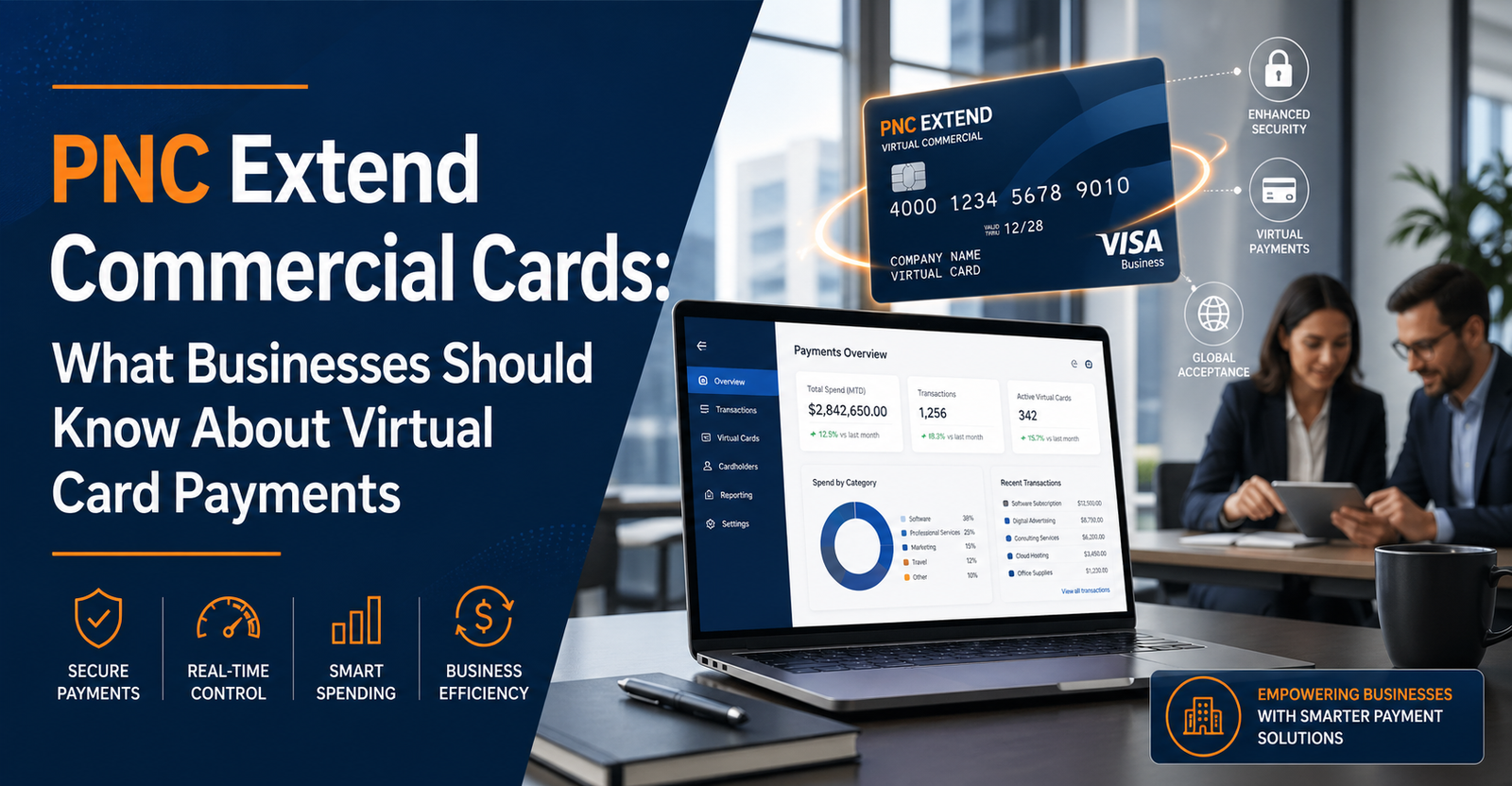
PNC Extend commercial cards are part of a growing shift in business payments: companies want faster, safer, and more flexible ways to pay employees, vendors, subscriptions, and everyday expenses without relying only on physical cards or manual reimbursement processes.
Through its collaboration with Extend, PNC Bank gives eligible PNC Commercial Card clients access to digital tools for creating and managing virtual cards. That means a business can use its existing commercial card account and issue digital card numbers for specific people, purchases, vendors, or budgets.
For finance teams, this can make business spending easier to control. For employees, it can reduce the need to use personal cards. For vendors, it can support faster digital payments. And for business owners, it can bring better visibility into where money is going.
PNC Extend Commercial Cards: The Quick Answer
PNC Extend commercial cards allow eligible PNC Bank commercial card clients to use Extend’s mobile and web platform to create, send, track, and manage virtual cards.
A virtual card is a digital card number connected to a business card account. It can be used for online payments, vendor invoices, subscriptions, travel bookings, employee expenses, and other business purchases. Many virtual cards can also be added to mobile wallets such as Apple Pay or Google Pay, depending on the setup.
The main benefit is control. Instead of handing out one physical card or dealing with reimbursements after the fact, businesses can issue cards with specific limits, expiration dates, and purposes.
What Are Virtual Cards?
A virtual card works like a regular payment card, but there is no plastic card in your hand. It is a digital card number that can be used to make purchases.
For a business, this can be useful because each virtual card can be created for a specific reason. For example, a company might create one virtual card for a vendor invoice, another for a software subscription, and another for an employee traveling to a conference.
That makes tracking easier. Instead of looking at one long credit card statement and trying to figure out who spent what, finance teams can see which card was used, who received it, what it was meant for, and how much was approved.
How PNC and Extend Work Together
PNC Bank provides commercial card services for business clients. Extend provides the digital platform that helps companies create and manage virtual cards tied to eligible commercial card accounts.
In simple terms, Extend adds a digital layer to the PNC Commercial Card program.
Businesses can use the platform to:
Create virtual cards
Send cards to employees or vendors
Set spending limits
Choose expiration dates
Track card activity
Collect receipts and notes
Organize transactions by category or budget
Improve reconciliation
This can be especially helpful for companies that already use PNC Commercial Cards but want more control and visibility without rebuilding their payment process from scratch.
Why Businesses Are Moving Toward Virtual Cards
Many businesses still rely on old payment habits. Employees use personal cards and submit expense reports. Vendors wait for checks or ACH payments. Finance teams chase receipts. Managers approve expenses after the money has already been spent.
That system can work, but it is often slow and messy.
Virtual card payments give businesses a more controlled way to handle spending before it happens. A finance manager can issue a card with a set limit and purpose, then track the transaction as it happens.
This can reduce:
Manual reimbursement work
Unclear expense reports
Lost receipts
Unauthorized spending
Shared card risk
Vendor payment delays
Time spent matching invoices to payments
For companies that process many small or recurring payments, virtual cards can make daily operations smoother.
Key Benefits of PNC Extend Commercial Cards
Better Spend Control
One of the biggest advantages of PNC Extend commercial cards is control. Businesses can issue virtual cards with specific spending limits and expiration dates.
For example, a manager might create a virtual card for a $600 hotel booking, a $250 software subscription, or a one-time vendor payment. Once the card reaches its limit or expires, it cannot keep being used.
That is much safer than sharing one card number across multiple people or departments.
Stronger Security
Virtual cards can reduce exposure of the main commercial card number. If a virtual card is used for one vendor or one purchase, the company does not have to share its primary card details widely.
If something looks suspicious, the virtual card can often be paused, closed, or limited without affecting the entire card program.
For businesses worried about fraud, vendor misuse, or card data exposure, this is a major advantage.
Faster Vendor Payments
Vendors often want to be paid quickly. Businesses want control and documentation. Virtual cards can help both sides.
A company can issue a virtual card for a vendor invoice and send the payment details digitally. The vendor receives card payment information, and the business gets a clearer payment record.
This can be useful for suppliers, contractors, consultants, marketing services, event vendors, and one-time business purchases.
Easier Employee Spending
Employee spending can become difficult when workers need to make purchases but do not have a company card. Without virtual cards, they may use personal funds and wait for reimbursement.
With Extend, a business can issue a virtual card to an employee for a specific amount and purpose. That employee can use it for approved spending, while the company keeps visibility.
This can work well for:
Business travel
Client meals
Event expenses
Office supplies
Field teams
Temporary projects
Remote employees
Department budgets
It gives employees flexibility without giving up financial control.
Cleaner Reconciliation
Finance teams spend a lot of time matching payments to receipts, invoices, departments, and budgets. Virtual cards can make that easier by adding more transaction details from the start.
With Extend, businesses may be able to use notes, reference codes, tags, receipts, attachments, and reporting tools. That means each payment can carry more context.
Instead of asking “Who made this charge?” or “What was this for?” the finance team has a clearer trail.
Common Use Cases for PNC Extend Commercial Cards
Vendor Payments
A company can create a virtual card for a specific vendor invoice. This can help with payment tracking and reduce the risk of a vendor having ongoing access to a main card number.
Software Subscriptions
Many businesses pay for software tools every month. A virtual card can be created for a specific subscription, making it easier to track recurring expenses and cancel or replace the card if needed.
Travel and Entertainment
Employees traveling for work may need to pay for hotels, meals, transportation, parking, or client-related expenses. Virtual cards can give them approved access without requiring personal reimbursement.
Department Budgets
A marketing team, sales team, or operations team can receive controlled virtual card access for approved spending. This helps departments move faster while keeping finance in control.
Temporary Workers and Contractors
If someone needs short-term spending access, a virtual card can be issued for a limited time. Once the project ends, the card can expire or be deactivated.
Events and Conferences
Businesses can use virtual cards for booth rentals, event supplies, travel bookings, meals, printed materials, and other conference-related costs.
Why Finance Teams Like Virtual Cards
Finance teams are often responsible for two things that can work against each other: helping the business move quickly and keeping spending under control.
Virtual cards help bridge that gap.
They allow employees and teams to spend when needed, but within rules set by the company. This can reduce back-and-forth approval delays while still protecting the business from uncontrolled card use.
Finance teams may benefit from:
More real-time visibility
Fewer reimbursement requests
Cleaner transaction data
Better vendor payment tracking
Reduced card-sharing risk
Easier budget management
Improved audit trails
For businesses growing quickly, those improvements can save time and reduce confusion.
How Virtual Cards Help Accounts Payable
Accounts payable teams often deal with invoices, approvals, payment timing, vendor records, and reconciliation. When payments are handled manually, it can create delays and extra work.
Using virtual cards for approved vendor payments can help accounts payable teams move faster while keeping records organized.
A virtual card payment can include clear transaction details, making it easier to match the payment to the invoice. It can also reduce check processing and manual follow-up.
For businesses with many vendors, this can be a practical upgrade.
Why Spend Visibility Matters
One problem with traditional business spending is that managers may not see the full picture until after expenses are submitted.
With PNC Extend commercial cards, companies can get better visibility into spending activity. They can see who has a card, how much was authorized, what has been spent, and whether a transaction fits the approved purpose.
This matters because small expenses can add up quickly. Subscriptions renew. Vendors charge fees. Employees make purchases across departments. Without visibility, spending can become scattered.
Virtual cards help bring that spending into one clearer system.
Security Advantages of Virtual Cards
Security is one of the biggest reasons businesses use virtual cards.
A physical card can be lost, copied, shared, or used by the wrong person. A single card number used across many vendors can create risk if one vendor system is compromised.
Virtual cards reduce that risk because they can be limited by amount, time, and purpose.
A business can issue a card for one vendor, one purchase, or one employee. If there is a problem, the company can close that virtual card without replacing the main account.
That makes virtual cards useful for both fraud prevention and internal control.
What Businesses Should Know Before Using PNC Extend
Before adopting PNC Extend commercial cards, companies should think through their internal payment process.
Virtual cards are helpful, but they work best when the business has clear rules.
Important questions include:
Who can create virtual cards?
Who approves spending limits?
Which vendors can be paid by card?
How are receipts collected?
What expense categories should be used?
How are cards closed or changed?
Who reviews transactions?
How are virtual card payments reconciled?
The technology is useful, but good policy makes it work better.
Is Extend a PNC Product?
Extend is a financial technology platform that works with banks and card issuers. In this case, Extend collaborates with PNC Bank to help eligible PNC Commercial Card clients use virtual card tools.
That means businesses should understand both sides of the relationship. PNC is the banking and commercial card provider. Extend provides the digital platform experience for issuing and managing virtual cards.
For businesses already working with PNC Treasury Management or PNC Commercial Cards, this collaboration can make it easier to add virtual card functionality without switching to a completely different card provider.
How This Fits Into Modern Commercial Payments
Business payments are becoming more digital. Companies want faster approval flows, better reporting, fewer paper checks, and more control over card spending.
PNC Extend commercial cards fit into that larger shift. They support the move from traditional commercial card programs toward more flexible digital payment tools.
This matters because business payments are no longer only about paying bills. They are also about data, control, security, and speed.
A modern finance team wants to know:
Who spent the money?
Why was it spent?
Was it approved?
Which budget does it belong to?
Was the receipt captured?
Can the vendor be paid faster?
Can fraud exposure be reduced?
Virtual cards can help answer those questions more clearly.
PNC Commercial Cards and Treasury Management
PNC Commercial Cards are part of PNC’s broader business banking and treasury management services. Companies use commercial cards for travel, procurement, accounts payable, and general business expenses.
The collaboration with Extend adds more flexibility to that card program by helping businesses manage digital card issuance and controls.
For larger companies, this can support procurement and accounts payable workflows. For small and mid-sized businesses, it can offer a simpler way to manage employee and vendor spending without adding too much administrative work.
What Types of Businesses Can Benefit?
Many types of businesses may benefit from virtual card tools, especially if they have frequent employee spending or vendor payments.
This can include:
Professional services firms
Construction companies
Marketing agencies
Healthcare practices
Retail businesses
Manufacturing companies
Technology startups
Nonprofits
Field service businesses
Travel-heavy teams
Event-based businesses
Any company that wants more control over spending and less manual expense tracking may find value in virtual cards.
Potential Limitations to Keep in Mind
Virtual cards are useful, but they are not perfect for every situation.
Some vendors may not accept card payments. Some may charge processing fees. Some businesses may need ACH, wire, or check payments for certain transactions. Internal teams may also need training to use the platform correctly.
Businesses should also think about approval workflows. If too many people can create cards without oversight, virtual cards can create confusion instead of solving it.
The best results come when companies combine virtual cards with clear spending policies and regular review.
How to Get the Most From PNC Extend Commercial Cards
To use PNC Extend commercial cards well, businesses should start with a few clear use cases rather than trying to change every payment process at once.
A good starting point could be:
Vendor invoices under a certain dollar amount
Software subscriptions
Travel expenses
Department budgets
One-time purchases
Temporary employee spending
From there, the company can review what works, update policies, and expand usage.
It is also helpful to train employees on when to use virtual cards, how to upload receipts, and what spending rules apply.
Why This Matters for Business Payment Security
Payment security is not only about stopping outside fraud. It is also about reducing everyday risk.
Shared card numbers, unclear approvals, missing receipts, and open-ended spending access can all create problems. Virtual cards help limit those risks by giving each payment a clearer boundary.
A card can be created for a certain amount, given to the right person, used for the right purpose, and then closed or expired.
That kind of control is valuable for businesses that want to move quickly without losing oversight.
Final Takeaway on PNC Extend Commercial Cards
PNC Extend commercial cards give eligible PNC Bank commercial card clients a more modern way to manage business payments through Extend’s virtual card platform. Businesses can create digital cards, set spending limits, send cards to employees or vendors, track activity, collect receipts, and improve reconciliation.
For finance teams, the value is control and visibility. For employees, it can reduce the need to use personal cards. For vendors, it may support faster payment. For business owners, it creates a cleaner way to manage spending without relying only on physical cards or manual expense reports.
The main point is simple: PNC and Extend are helping businesses turn commercial cards into more flexible digital payment tools. For companies looking to modernize payments, reduce manual work, and improve spend control, virtual cards can be a practical step forward.