 By Admin
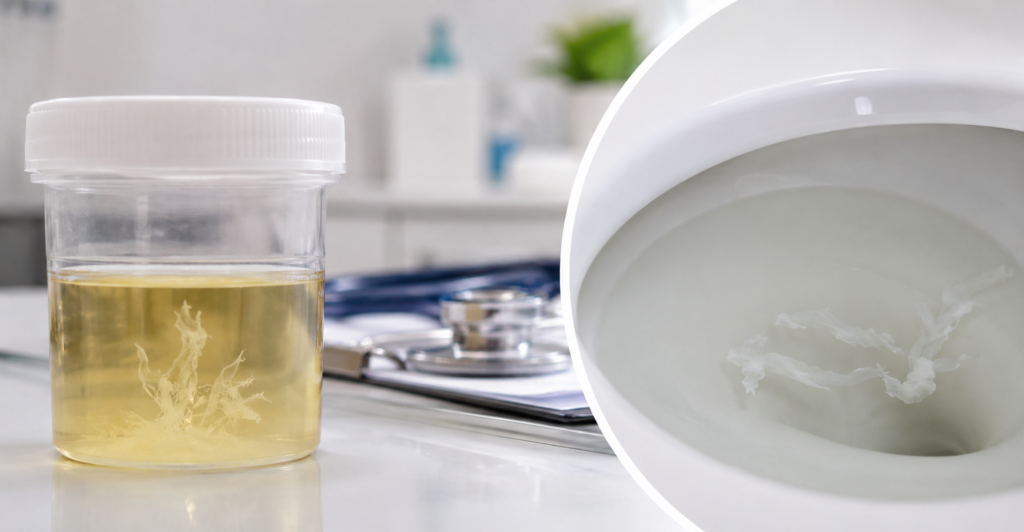
Noticing white stuff in pee female, cloudy urine, floating particles, or white tissue in urine can be confusing and uncomfortable. For many women, it turns out to be something harmless, such as normal vaginal discharge mixing with urine. But sometimes, white stuff in urine can also point to a urinary tract infection, vaginal infection, kidney stone, or another health issue that needs medical attention.
The important thing is to look at the full picture: Is there pain? Burning? Bad smell? Fever? Pelvic discomfort? Blood? Is the white material stringy, cloudy, thick, flaky, or like small particles? These details can help you understand whether it may be normal body discharge or a sign that you should speak with a healthcare professional.
Medical sources commonly list pregnancy, UTIs, ovulation, bacterial vaginosis, yeast infections, STIs, and kidney stones as possible reasons for white particles or sediment in urine.
What Does White Stuff in Pee Female Usually Mean?
When women search for white stuff in pee female, they are usually describing one of these things:
- Small white particles floating in urine
- Cloudy or milky-looking urine
- Stringy white mucus in the toilet
- Tissue-like white fragments
- Thick white discharge mixed with urine
- Sediment settling at the bottom of the toilet bowl
In females, urine passes out of the urethra, which is very close to the vagina. Because of that, normal vaginal discharge, cervical mucus, or infection-related discharge can mix with urine and make it look like there is white tissue in urine. This is one reason the issue is often more noticeable in women than in men.
A small amount of white or clear mucus, especially without pain, odor, fever, itching, or burning, is not always a sign of danger. But repeated white particles, strong symptoms, or sudden changes should not be ignored.
Common Female-Specific Causes of White Stuff in Urine
Normal Vaginal Discharge Mixing With Urine
One of the most common and least worrying explanations is simple: vaginal discharge mixes with urine while you pee. This can create a white, cloudy, or stringy appearance in the toilet.
Normal discharge may be:
- Clear or white
- Slightly sticky or creamy
- Mild in smell or odorless
- More noticeable at certain times of the month
For women, normal vaginal secretions can enter the urine stream and may look like white tissue in urine, especially when there are no other symptoms.
This type of discharge is usually part of the body’s natural cleaning process. It may change depending on hormones, menstrual cycle, sexual activity, birth control, pregnancy, or stress.
Ovulation and Cervical Mucus
Around ovulation, the body may produce more cervical mucus. This mucus can be clear, white, slippery, creamy, or stretchy. If it mixes with urine, it may look like white stuff in urine or stringy white tissue.
Medical News Today notes that some people produce extra cervical mucus during ovulation, and it may look like a stringy white substance in urine.
This is usually normal if:
- There is no bad smell
- There is no burning while peeing
- There is no itching or irritation
- There is no pelvic pain
- The discharge is not green, yellow, gray, or bloody
If the discharge smells foul, changes color, or comes with discomfort, it may not be simple ovulation mucus.
Pregnancy Discharge
Pregnancy can increase vaginal discharge because of hormonal changes. This discharge, often called leukorrhea, can be thin, white, or milky. When it mixes with urine, it may appear as white particles, cloudy urine, or white tissue in urine.
Medical sources explain that pregnancy can cause more vaginal discharge, and this discharge may mix with urine and appear as white particles.
During pregnancy, it is still wise to be careful. Speak with a doctor or OB/GYN if the discharge is:
- Dark, pink, brown, or bloody
- Strong-smelling
- Thick and itchy
- Paired with burning urination
- Paired with pelvic pain
- Paired with fever or chills
Pregnancy-related infections should be checked early because untreated urinary or vaginal infections can cause complications.

Urinary Tract Infection: A Common Reason for White Particles
A urinary tract infection, or UTI, is one of the most common medical causes of cloudy urine, white sediment, or white particles. UTIs happen when bacteria enter the urinary tract and multiply. Women are more prone to UTIs because the female urethra is shorter, making it easier for bacteria to reach the bladder.
A UTI may make urine look cloudy or cause white particles because of bacteria, white blood cells, pus, or tissue debris. Medical sources note that UTIs can cause white particles, cloudy urine, foul-smelling urine, pelvic pain, urgency, and burning urination.
Common UTI symptoms include:
- Burning or pain while peeing
- Frequent urge to urinate
- Feeling like you need to pee but only passing a little
- Cloudy urine
- Strong or bad-smelling urine
- Lower belly or pelvic discomfort
- Blood in urine
- Fever or chills in more serious cases
If you see white stuff in pee female along with burning, urgency, or pelvic pain, a UTI is one of the first things to consider. A urine test can usually help confirm whether infection is present.
Leukocytes, Pus, and White Blood Cells in Urine
Sometimes the white material is not vaginal discharge. It may be linked to leukocytes, which are white blood cells. White blood cells can appear in urine when the body is fighting inflammation or infection.
WebMD notes that leukocytes in urine may indicate an infection such as a UTI or another condition. Mayo Clinic also explains that white blood cells in urine can be a sign of infection, and leukocyte esterase or nitrites on a urine test may point toward a UTI.
This is why a urine test matters. Looking at urine in the toilet can give clues, but it cannot clearly show whether the white material is discharge, mucus, pus, crystals, or cells.
Yeast Infection and White Discharge
A vaginal yeast infection can also make it seem like there is white tissue in urine. Yeast infections often cause thick, white discharge that may look like cottage cheese. If this discharge mixes with urine, it can appear as white chunks, white flakes, or white floating material.
Typical yeast infection symptoms may include:
- Thick white discharge
- Itching around the vagina
- Redness or irritation
- Burning during urination
- Pain or discomfort during sex
Medical sources describe yeast infections as a possible cause of white particles in urine when thick discharge mixes with pee.
A yeast infection is usually treatable, but it is best not to guess if symptoms are new, severe, recurring, or different from what you have had before. Some infections can look similar but need different treatment.
Bacterial Vaginosis and Fishy-Smelling Discharge
Bacterial vaginosis, often called BV, happens when the natural balance of bacteria in the vagina changes. BV discharge is often thin, grayish-white, and may have a fishy smell. When it mixes with urine, it can look like white stuff in urine or cloudy white discharge.
Signs of BV may include:
- Thin white or gray discharge
- Fishy smell, often stronger after sex
- Burning while peeing
- Vaginal irritation
- Sometimes no symptoms at all
Medical News Today and Power both list bacterial vaginosis as a possible female-specific reason for white particles or white discharge mixing with urine.
BV is not the same as a yeast infection. Yeast infections are usually thick and itchy, while BV is more often thin with a fishy odor. Because the treatments are different, proper diagnosis is important.
STIs and Urethral Discharge
Some sexually transmitted infections can cause abnormal vaginal or urethral discharge. This discharge may mix with urine and look like white particles, pus, cloudy urine, or white tissue in urine.
Possible STI-related symptoms include:
- Unusual discharge
- Burning while peeing
- Pelvic pain
- Bleeding between periods
- Pain during sex
- Itching or irritation
- Bad smell
- No symptoms at all in some cases
Medical sources mention chlamydia, gonorrhea, and trichomoniasis as infections that may cause discharge and make urine appear cloudy or show white particles. Ubie Health also notes that white urethral discharge in females can sometimes be pus linked with urethritis, including infections such as chlamydia or Mycoplasma.
If there is any chance of an STI, testing is the safest step. Waiting can allow the infection to spread or cause complications.
Kidney Stones and White Sediment
Kidney stones can sometimes cause cloudy urine, white sediment, or tiny white particles. Stones form when minerals in urine crystallize. Small fragments may pass through the urinary tract and show up in urine.
Kidney stones often come with stronger symptoms, such as:
- Sharp pain in the side or back
- Pain that moves toward the lower belly or groin
- Blood in urine
- Nausea or vomiting
- Burning during urination
- Frequent urge to pee
- Cloudy or foul-smelling urine
Medical News Today notes that small kidney stones may appear as small white particles in urine, while Advanced Urology explains that stone fragments, blood cells, and infection can contribute to cloudy urine.
Severe side pain, fever, vomiting, or blood in urine should be treated seriously.
Dehydration and Concentrated Urine
Sometimes urine looks cloudy because it is too concentrated. When you do not drink enough fluids, minerals and waste products become more concentrated in the urine. This can make urine look darker, cloudy, or sediment-like.
Advanced Urology notes that dehydration is a common cause of cloudy urine because concentrated urine contains more minerals and waste products.
Signs that dehydration may be involved include:
- Dark yellow urine
- Strong urine smell
- Dry mouth
- Headache
- Feeling tired
- Peeing less often
If the cloudy appearance improves after drinking more water, dehydration may have been part of the issue. But hydration alone will not fix an infection, kidney stone, or vaginal condition.
When White Tissue in Urine May Be More Serious
Most cases of white stuff in pee female are not emergencies, but some symptoms need attention. You should speak with a doctor if white particles or tissue-like material keeps appearing or comes with other changes.
Get medical advice if you notice:
- Burning or stinging while peeing
- Fever or chills
- Pelvic pain
- Back or side pain
- Blood in urine
- Strong foul smell
- Green, yellow, gray, or bloody discharge
- Thick discharge with intense itching
- Pain during sex
- Nausea or vomiting
- Pregnancy with new urinary or vaginal symptoms
- White particles that do not go away
Docus lists pain, burning, fever, chills, unusual smell, thick discharge, and persistent white floaties as reasons to see a doctor.
A healthcare provider may suggest a urinalysis, urine culture, pelvic exam, vaginal swab, STI test, pregnancy test, or imaging if kidney stones are suspected.
How Doctors Usually Check the Cause
A doctor does not rely only on appearance. They may ask about your symptoms, cycle timing, sexual health, pregnancy possibility, medications, hygiene products, and past infections.
Common tests may include:
Urinalysis: Checks for white blood cells, red blood cells, protein, bacteria, nitrites, crystals, and other markers.
Urine culture: Helps identify bacteria if a UTI is suspected.
Vaginal swab: Can check for yeast, BV, or other vaginal infections.
STI testing: Important if there is unusual discharge, pelvic pain, burning, or possible exposure.
Pregnancy test: Useful when discharge changes and pregnancy is possible.
Ultrasound or imaging: May be used if kidney stones, kidney infection, or structural issues are suspected.
This kind of testing matters because white stuff in urine can come from different sources, and the right treatment depends on the cause.
What You Can Do at Home While Watching Symptoms
If symptoms are mild and there is no pain, fever, blood, bad smell, or pregnancy concern, you can observe for a short time and focus on simple supportive steps.
Helpful habits include:
- Drink enough water
- Avoid holding urine for too long
- Wipe front to back
- Avoid harsh scented soaps or vaginal sprays
- Wear breathable underwear
- Urinate after sex
- Track when it happens in your cycle
- Notice whether discharge has odor, color, or itching
Do not use antibiotics, antifungals, or vaginal treatments without being reasonably sure what you are treating. Yeast, BV, UTI, and STIs can overlap in symptoms but need different care.
Key Takeaway for Women Seeing White Stuff in Pee
Seeing white stuff in pee female does not automatically mean something dangerous. In many cases, it is normal vaginal discharge, ovulation mucus, or pregnancy-related discharge mixing with urine. But white tissue in urine can also be connected to UTIs, yeast infections, bacterial vaginosis, STIs, kidney stones, dehydration, or inflammation.
The safest approach is to watch the pattern and symptoms. If it happens once and you feel completely well, it may not be serious. If it keeps happening, smells bad, causes burning, comes with pain, or appears during pregnancy, a medical checkup is the right move.
 Jack kallis