 By Admin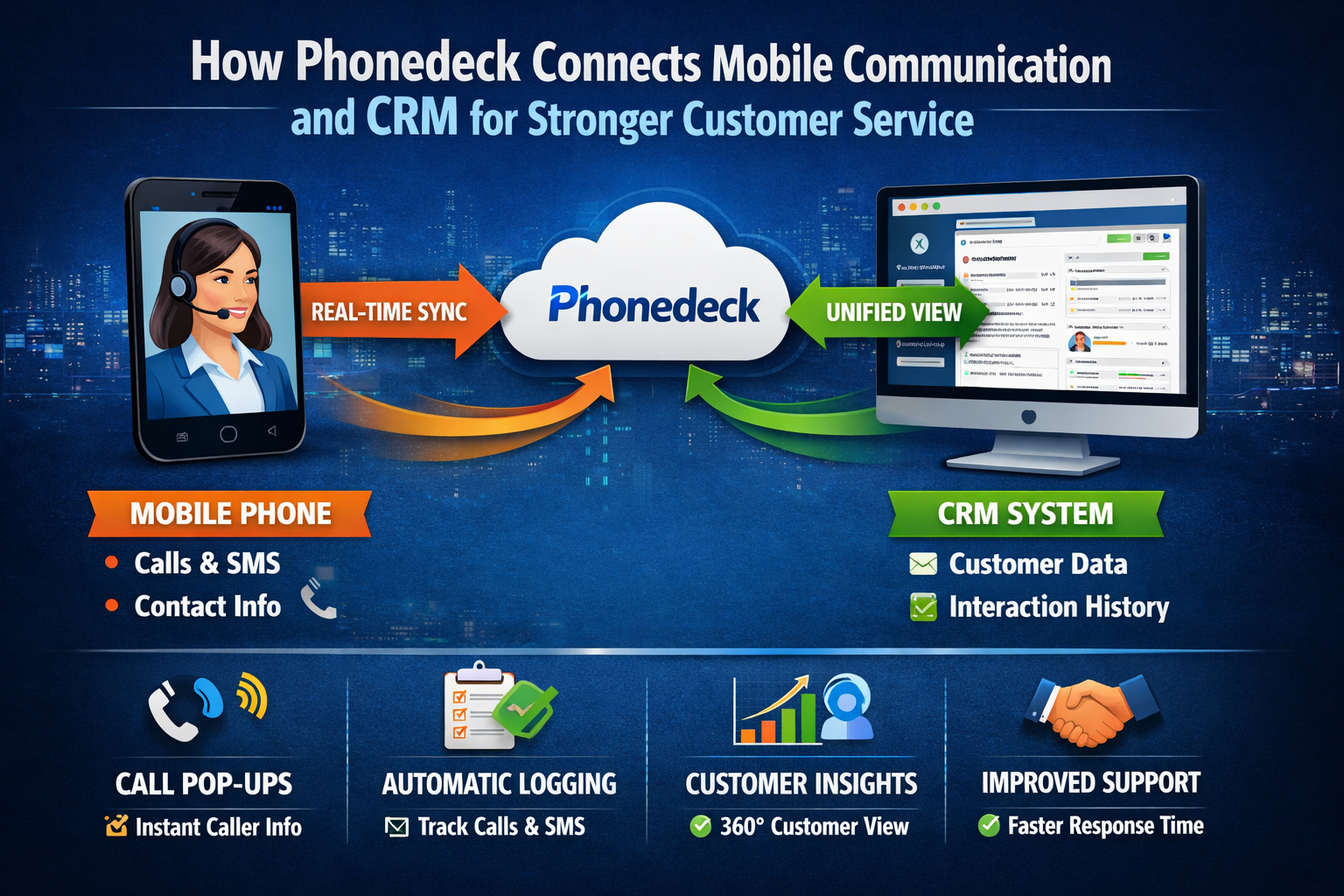
For a lot of businesses, customer service breaks down in the small gaps between tools. A call comes in on a mobile phone, customer history sits in the CRM, notes live somewhere else, and the person handling the conversation has to piece everything together on the fly. That is exactly the kind of friction Phonedeck was built to reduce. In product descriptions, Phonedeck is presented as a mobile telephony integration for Salesforce that lets users manage calls from the browser or a smartphone, track mobile activity, and connect communication with workflow.
That matters because better customer service usually does not come from one dramatic change. It comes from making everyday interactions faster, clearer, and easier for both the customer and the team handling the conversation. Broader mobile customer-experience research points in the same direction. Mobile technology improves experiences when it removes delays, gives staff real-time access to information, and supports quicker, more efficient interactions.
Why mobile communication matters so much in customer service
Customers do not really care which internal system a business uses. They care about whether someone answers quickly, understands the issue, and follows up without making them repeat themselves. Mobile technology helps when it puts the right information in the hands of frontline teams at the right time. Samsung’s retail operations guidance highlights that mobile tools can reduce wait times, support more efficient service, and create more memorable experiences when they help employees assist customers faster. MarketingProfs makes a similar point, arguing that mobile technology improves customer experience when it brings useful information, convenience, and speed together in one place.
This is where the idea behind Phonedeck becomes more interesting than it first sounds. It was not just about taking calls from a phone. It was about giving businesses a way to pull mobile communication into a more organized customer workflow. When that happens, customer service becomes less reactive and more informed.
What Phonedeck actually connected
The clearest product descriptions say Phonedeck let users send and receive calls and texts from a website, answer calls from a pop-up, sync contacts and phone usage data to a web interface, and review detailed call statistics. TechCrunch also noted features like geolocation data and records of missed, initiated, and received calls. On the AppDirect Marketplace, Phonedeck is described as integrating mobile calls with the Salesforce cloud so users can manage workflow in the browser or on a smartphone.
That combination is the real value. On one side, you have mobile communication such as calls, texts, and voicemails. On the other side, you have CRM data, sales activity, and customer records. Phonedeck sat in the middle and tried to connect the two. Instead of treating the phone as a separate device and the CRM as a separate system, it pushed them into the same working environment.
Why that improves customer service
The biggest gain is context. When a service rep or salesperson can see contact details, recent call activity, and workflow information together, conversations tend to go better. The customer gets a quicker response, the rep spends less time switching between tools, and follow-up becomes easier to manage. That is one reason broader mobile-CX advice keeps emphasizing integration and real-time access to information. Mobile technology is most useful when it supports timely assistance rather than acting like a disconnected add-on.
Think about how many weak customer experiences come from basic confusion. Someone calls, the team misses the call, there is no easy shared record, and the follow-up happens late or not at all. A tool like Phonedeck helps by giving businesses a cleaner view of call handling and communication history. Even simple visibility into missed calls, active conversations, and synced contacts can make service feel more responsive and less chaotic.
The CRM connection is what makes it more powerful
Plenty of tools help people make calls. What makes Phonedeck more relevant to customer service is the CRM connection. Once communication activity links into Salesforce, the phone is no longer just a phone. It becomes part of the wider customer journey. Calls can connect to accounts, follow-up can align with pipeline activity, and the business gets a clearer picture of how mobile interactions relate to sales and service outcomes.
That kind of connection matters because modern customer experience is rarely built in one channel. It happens across touchpoints. Mobile communication, stored customer history, and workflow steps need to work together if the experience is going to feel smooth. The supporting thought-leadership pages in your competitor set keep reinforcing that same idea from different angles, whether through personalization, real-time service, or faster employee action.
Why small businesses and lean teams would care
One reason TechCrunch found Phonedeck interesting back in 2012 is that it looked useful for small businesses that needed to stay close to their phones but still work from a browser-based environment. That is still a useful customer-service lesson. Small teams usually do not lose customers because they do not care. They lose customers because communication gets messy, callbacks slip, and no one has a clean view of what happened last.
A tool that syncs contacts, surfaces call activity, and ties mobile communication into the CRM helps fix that. It does not magically create great service, but it gives teams a stronger operating base. And that matters even more when one person is wearing multiple hats across sales, support, and account follow-up.
The bigger lesson from Phonedeck
The broader lesson is that mobile technology works best when it becomes part of the workflow instead of sitting off to the side. The strongest mobile customer experiences happen when businesses reduce friction, use real-time information well, and make it easier for staff to act in the moment. Samsung highlights this through faster service and reduced wait times. MarketingProfs frames it around making experiences easier, faster, and more enjoyable. Phonedeck fits that logic because it tried to make mobile calls and messages part of a more usable business system.
That is also why the topic still feels relevant. Even if the product descriptions come from an earlier mobile-CRM era, the core idea has aged well. Businesses still want better visibility across conversations. Customers still expect faster responses. And teams still struggle when communication data lives in one place while customer records live in another. Phonedeck is a good example of how bringing those two worlds together can lead to stronger customer service.
In simple terms, Phonedeck connected mobile communication and CRM by turning calls, texts, contact sync, and call analytics into a browser- and smartphone-friendly workflow. That made it easier for businesses to see what was happening, respond faster, and build a more consistent customer experience around real interactions instead of scattered tools. And that is really the heart of better service.